
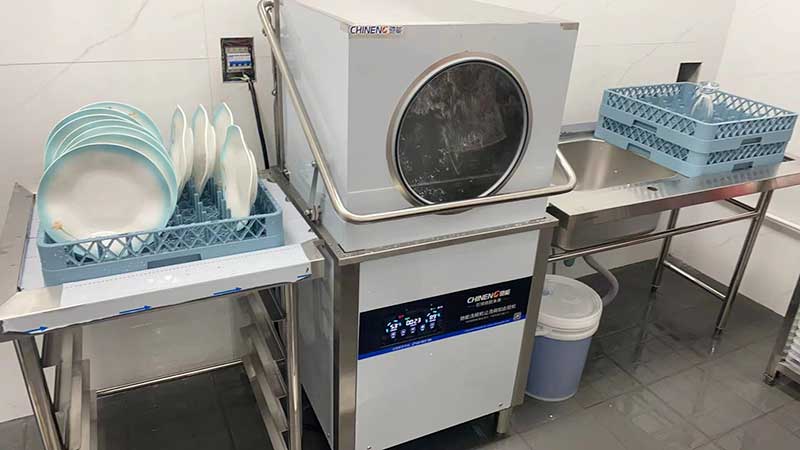
Labor is one of the largest ongoing expenses for any restaurant. Dishwashing staff are particularly challenging to recruit, train, and retain — the work is physical, the hours are long, and turnover is high. A hood type dishwasher from CHINENG directly addresses this problem by reducing the number of people needed to keep dishes moving, shortening the time each cycle takes, and making the entire process simple enough that almost anyone on the team can operate it.
Why Dishwashing Labor Costs Keep Rising
In many markets, finding reliable dishwashers has become harder than ever. Wages are increasing, competition for hourly workers is intense, and training new hires takes time that busy kitchens cannot spare. When a dishwasher calls in sick or quits without notice, the entire back-of-house feels the strain. Every hour spent searching for replacement staff is an hour not spent on food quality or guest service.
How a Hood Type Dishwasher Reduces Labor Needs
One Operator Can Handle the Entire Station
A hood type dishwasher is designed for single-person operation. The operator loads a rack, closes the hood, and the machine completes the wash, rinse, and sanitizing cycle automatically. There is no need for a second person to manage a conveyor or transfer racks between stations. In many restaurants, one team member can keep up with dishwashing during normal service, and even during busy periods, the workload remains manageable for a single operator.
Faster Cycles Mean Less Waiting and Fewer Staff Hours
Each cycle on a hood type dishwasher typically runs 60–90 seconds. That speed changes how labor is scheduled. Instead of keeping a dishwasher on the clock for long stretches waiting for dishes to accumulate, staff can run racks as needed and return to other tasks. Over a full shift, these saved minutes add up to hours — and hours translate directly into lower payroll costs.
Simple Operation Reduces Training Time
High turnover means constant training. A hood type dishwasher is intuitive to use: load, close, press start. New employees can be trained in minutes rather than days. This reduces the burden on senior kitchen staff and shortens the time it takes for a new hire to become productive. It also means that when the usual dishwasher is absent, another team member can step in without hesitation.
Less Physical Strain Means Fewer Injuries and Absences
Manual dishwashing involves constant bending, lifting, and exposure to hot water. These conditions lead to fatigue, strain, and absenteeism. A hood type dishwasher eliminates most of the heavy lifting — racks slide in and out, and the machine does the scrubbing. With less physical stress, staff are more likely to stay healthy and show up consistently, reducing unplanned absences that force managers to scramble for coverage.
Key Features of CHINENG Hood Type Dishwashers
- Full 304 stainless steel body: Durable and easy to clean, built to withstand daily use in busy kitchens.
- Digital temperature control with stainless steel heating element: Maintains a final rinse temperature of at least 82°C (180°F) for consistent sanitization.
- Self-cleaning program: Automatically flushes internal pipes and chambers, reducing manual cleaning time between shifts.
- Heat recovery system (standard on all models): Reuses exhaust steam to preheat incoming water, saving 15%–25% energy during long operating hours.
Contact CHINENG for More Information
If your restaurant is struggling with dishwashing labor costs, high turnover, or scheduling gaps, a hood type dishwasher from CHINENG can help you do more with fewer hands.
CHINENG Commercial Kitchen Equipment & Solutions
📞 Phone / WhatsApp: +86 137 9883 6990
📧 Email: chinengkitchen@gmail.com
🌐 Website: www.chinengkitchen.com
 No products in the cart.